Why Rhino's Important ?

RHINOS OCCURRED IN 29 COUNTRIES IN AFRICA IN 1977…
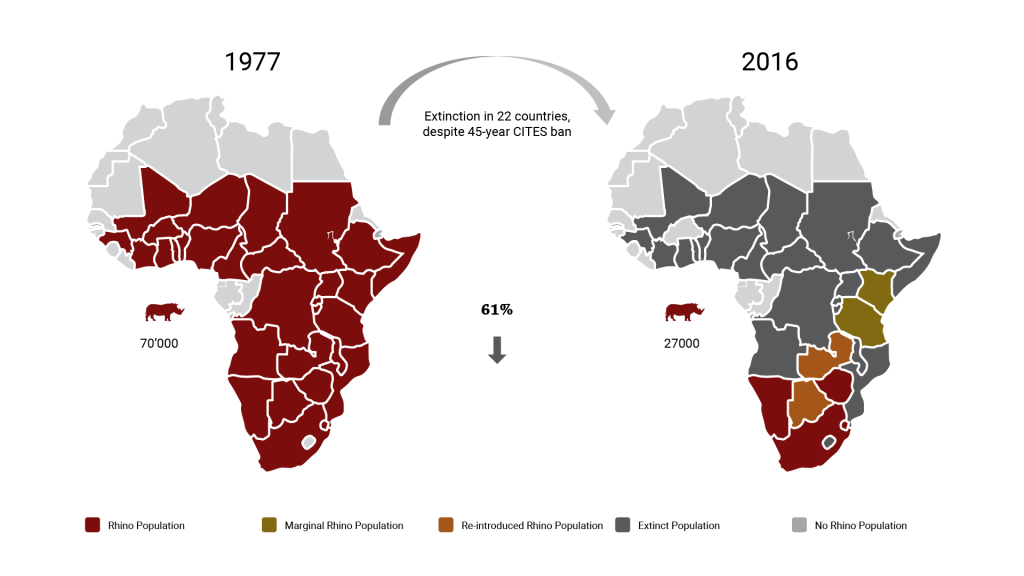
In 1977 when the ban was imposed, African rhinos still survived in 29 countries. But uncontrolled poaching, soaring security costs, and subsequent habitat loss have led to extirpation in 22 countries despite a 45-year ban imposed by CITES in 1977 on international trade in rhino horn. Currently, they occur in biologically sustainable populations in only five of those range states.

(John Hanks, 2016)

A keystone species is an organism that helps define an entire ecosystem. Without its keystone species, the ecosystem would be dramatically different or cease to exist altogether.

National Geographic

RHINOS ARE A KEYSTONE SPECIES


Rhino grazing maintains the Savannah grasslands that function as a ‘carbon sink’. A carbon sink is something that’s known to absorb more carbon compounds (like carbon dioxide) than what they release


By choosing certain plants over others, rhinos increase biodiversity by giving other species of plants the ability and space to grow


Rhinos consume more than 50kg of vegetation per day and deposit more than 20kg of dung. This dung fertilizes the soil and provides livelihoods for many other species.


Wallowing in mud puddles, they help to create natural waterholes and keep existing water holes open


Rhinos serve as an emblem of sacred leadership in Africa's class-based society. They are also an iconic African symbol as they are a member of the Big Five. As such, they are a significant tourism drawcard for African countries.

RHINOS INCREASE BIODIVERSITY PAR-EXCELLANCE

South America

94%

Africa

65%

Asia

45%

North America

33%

Europe

24%

Rhino horn trade done right

Royal Bhejane