
RHINOS OCCURRED IN 29 COUNTRIES IN AFRICA IN 1977…
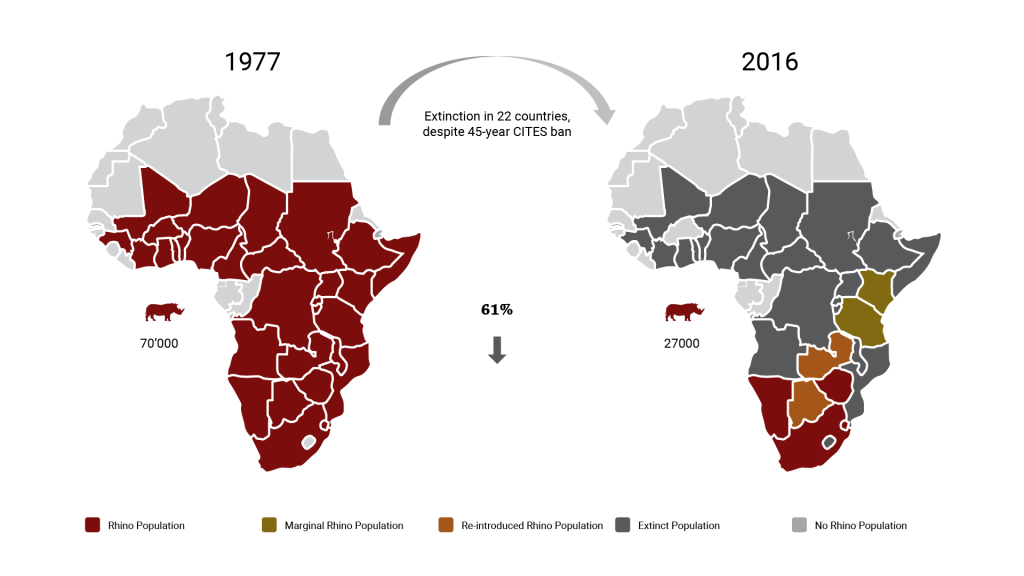
In 1977 when the ban was imposed, African rhinos still survived in 29 countries. But uncontrolled poaching, soaring security costs, and subsequent habitat loss have led to extirpation in 22 countries despite a 45-year ban imposed by CITES in 1977 on international trade in rhino horn. Currently, they occur in biologically sustainable populations in only five of those range states.
(John Hanks, 2016)
(John Hanks, 2016)
A keystone species is an organism that helps define an entire ecosystem. Without its keystone species, the ecosystem would be dramatically different or cease to exist altogether.
National Geographic
RHINOS ARE A KEYSTONE SPECIES
RHINOS INCREASE BIODIVERSITY PAR-EXCELLANCE


